
Sometimes professionals appear almost superhuman in front of ordinary people!
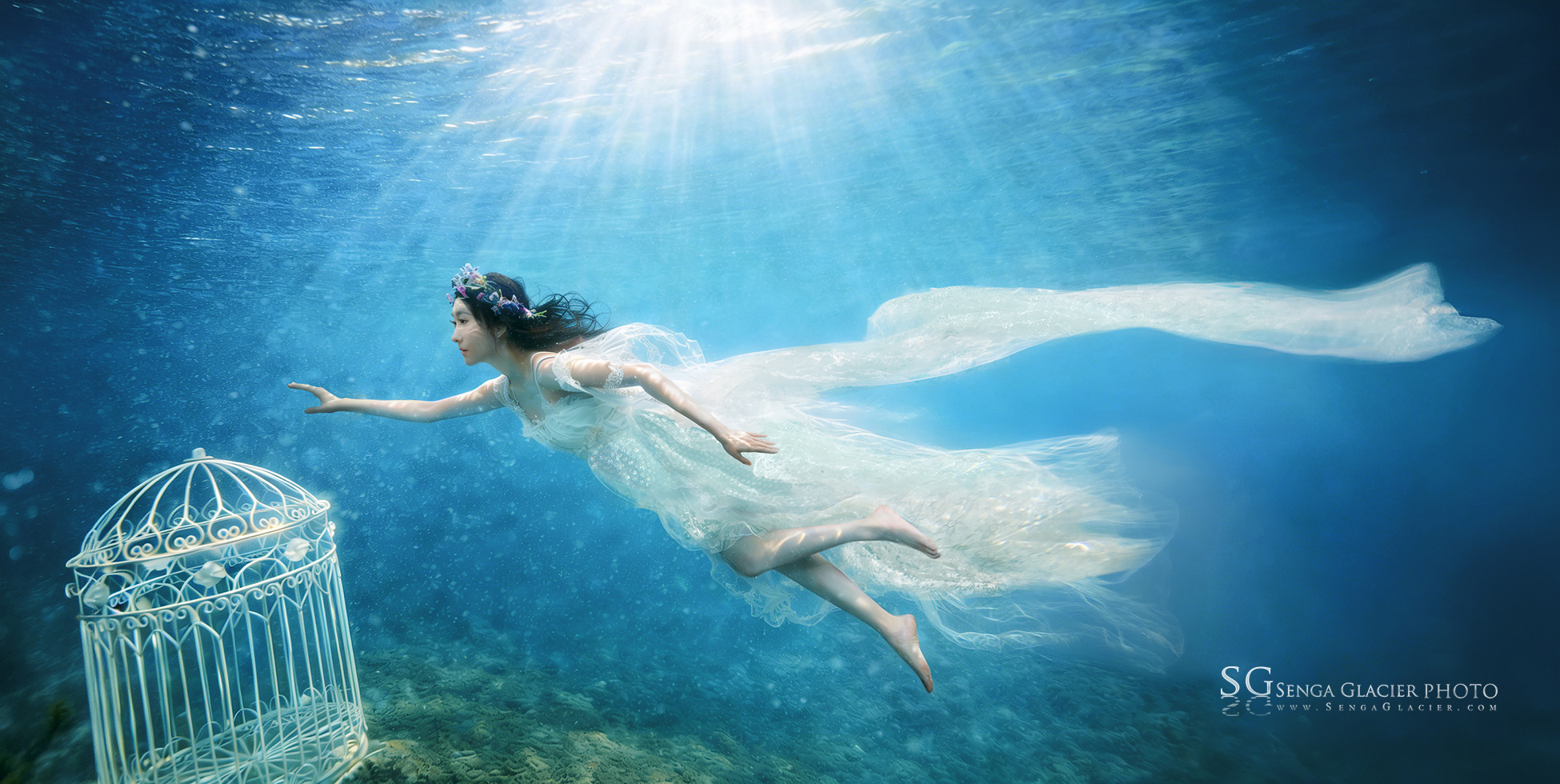
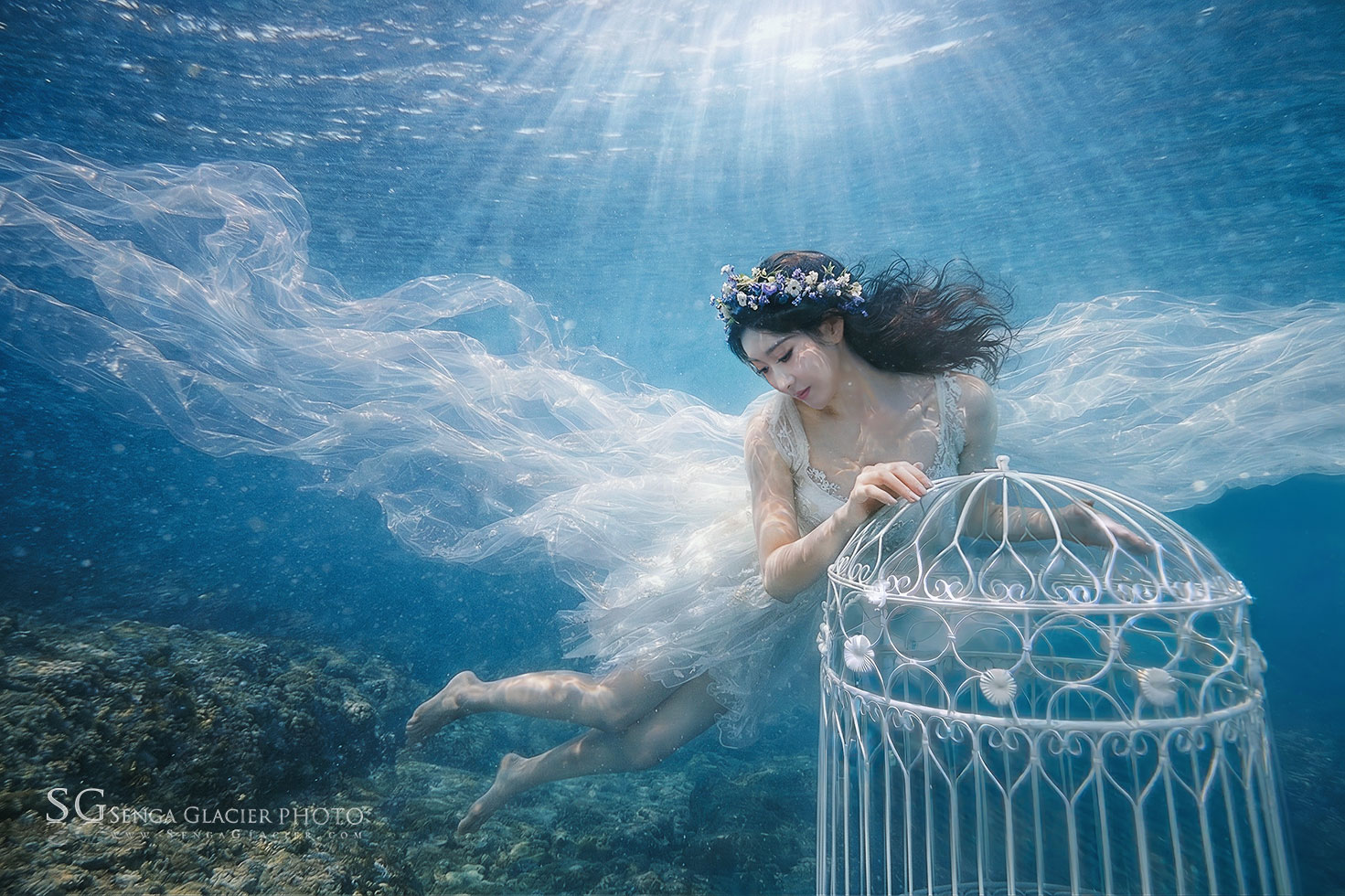
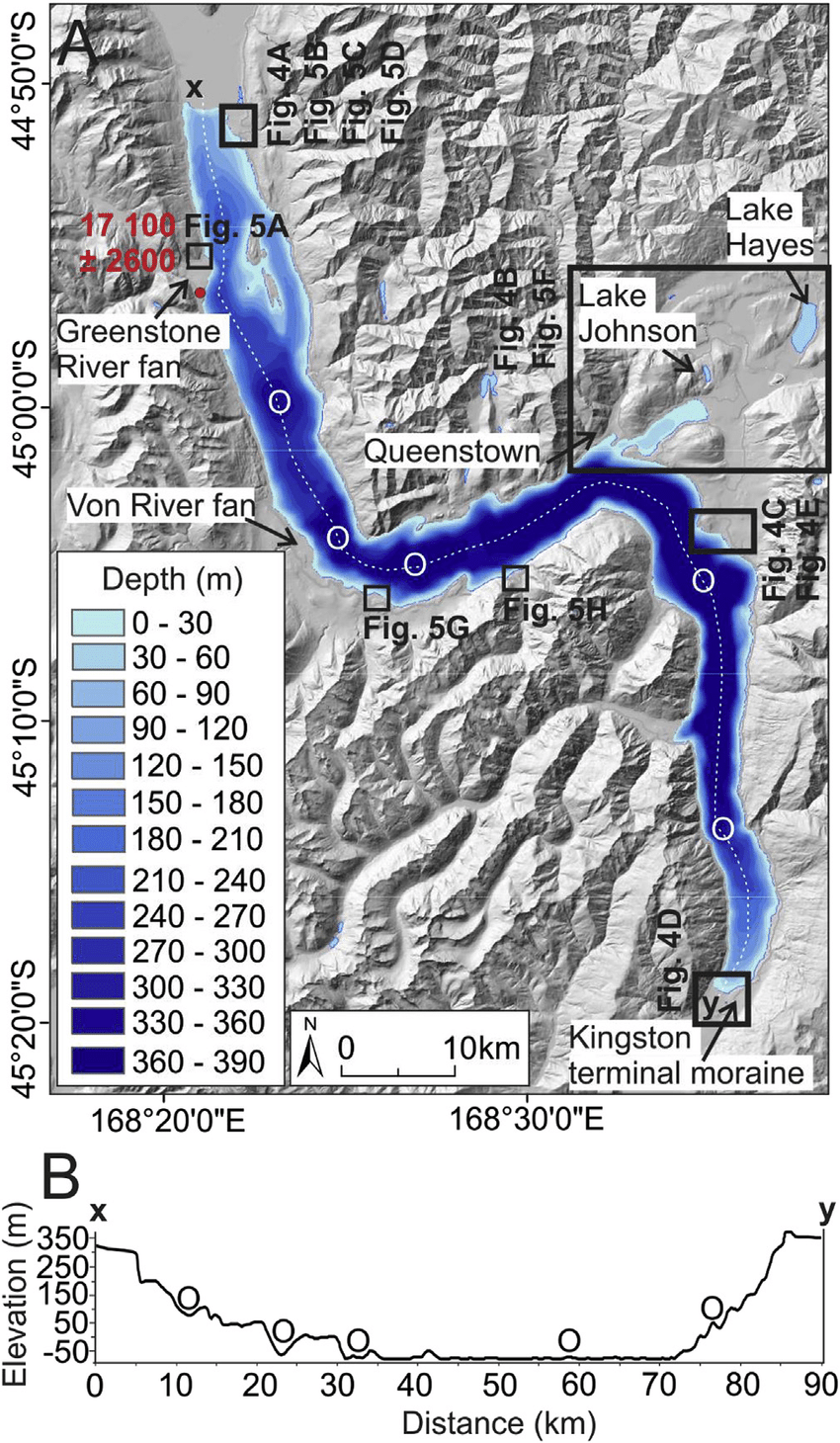
In the summer of 2026, I was shooting an underwater wedding session in Queenstown, New Zealand, at Lake Wakatipu. The model had a diving certification from Malaysia, but this was her first time entering the icy glacial waters of New Zealand’s South Island. These lakes are simply “cold” and “even colder,” with crystal-clear water like distilled liquid, though visibility varies with the weather. We stayed within about 3 meters of the surface. The birdcage prop was placed on a nearby rock ledge.
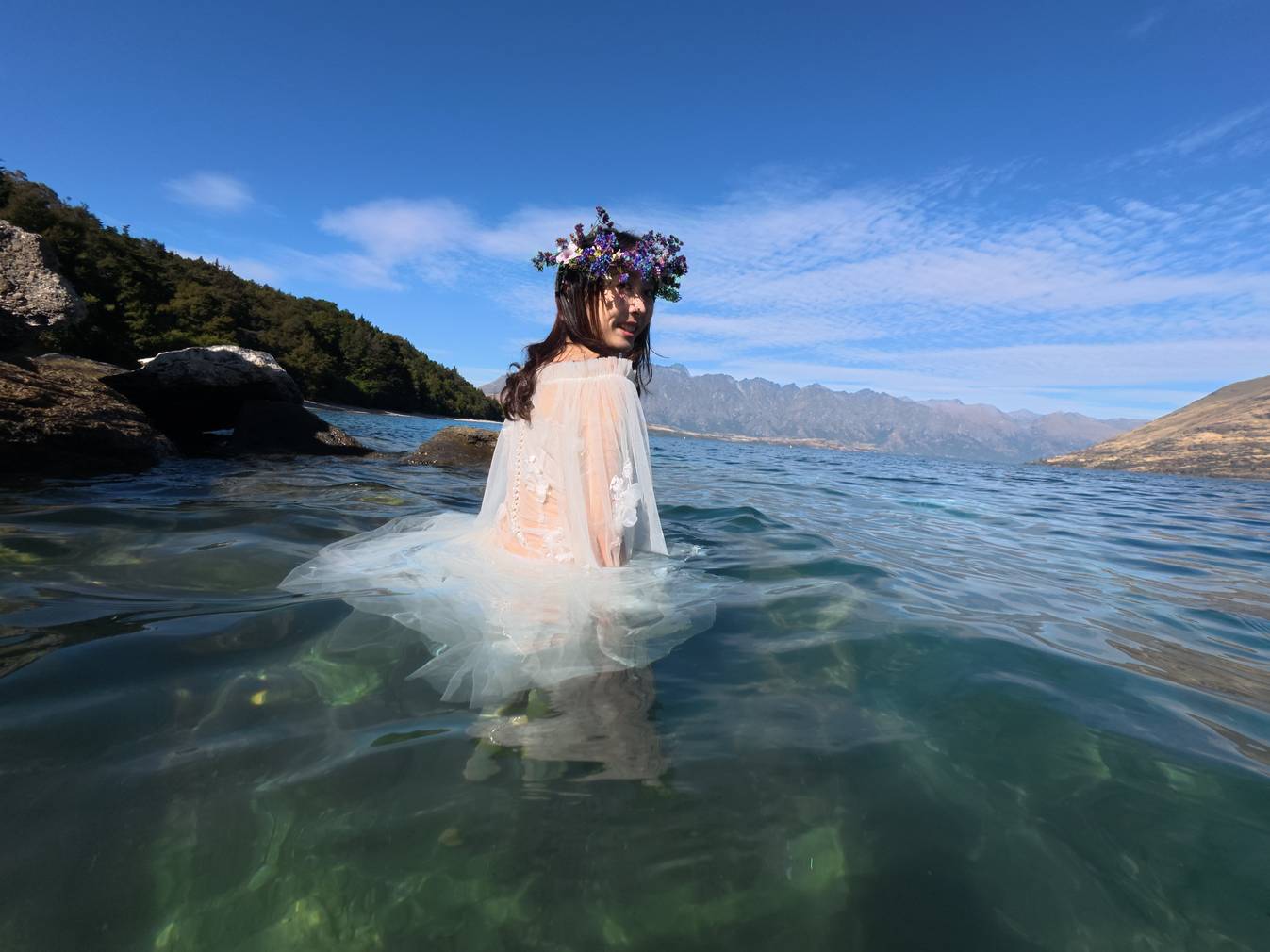
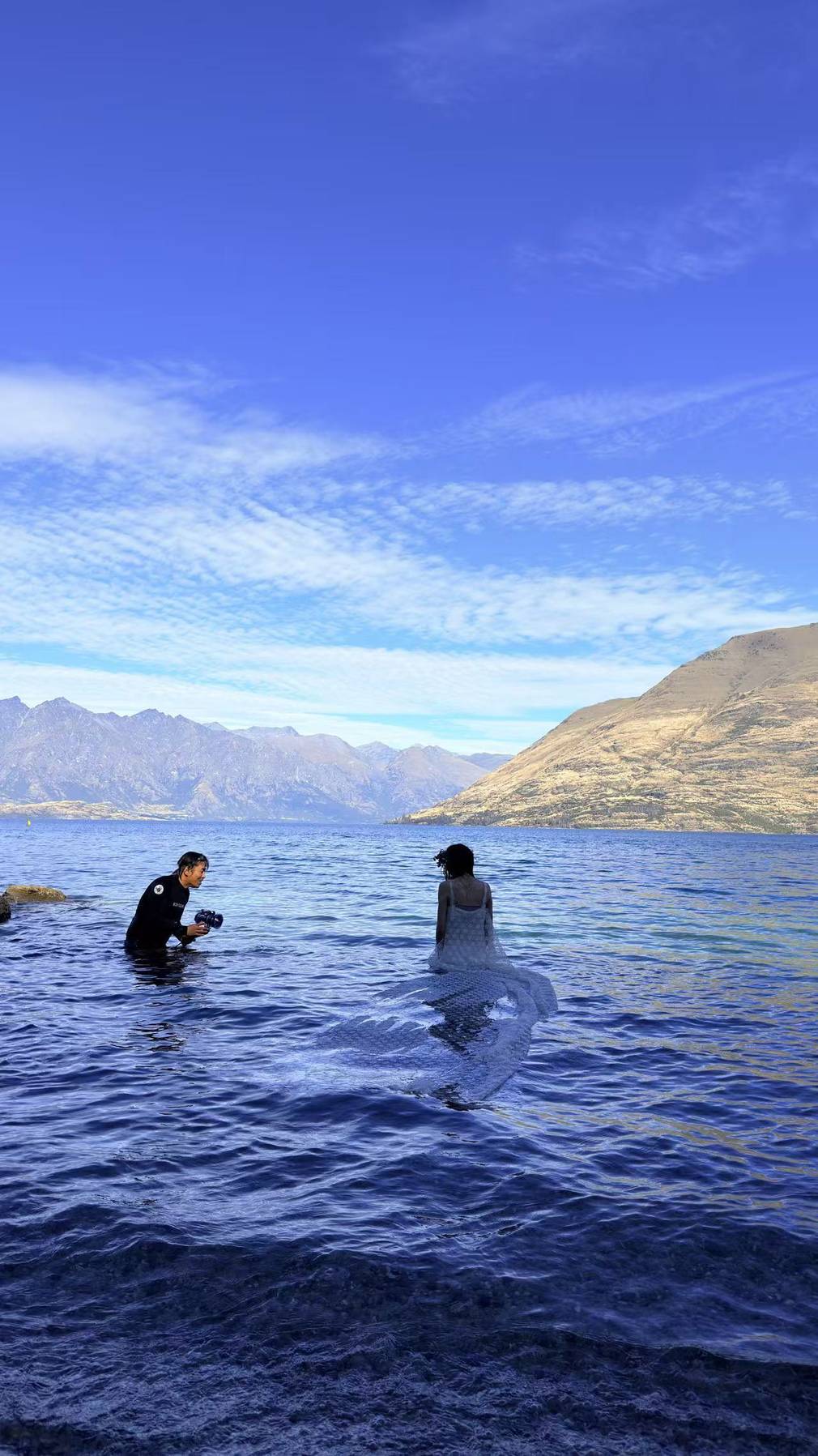
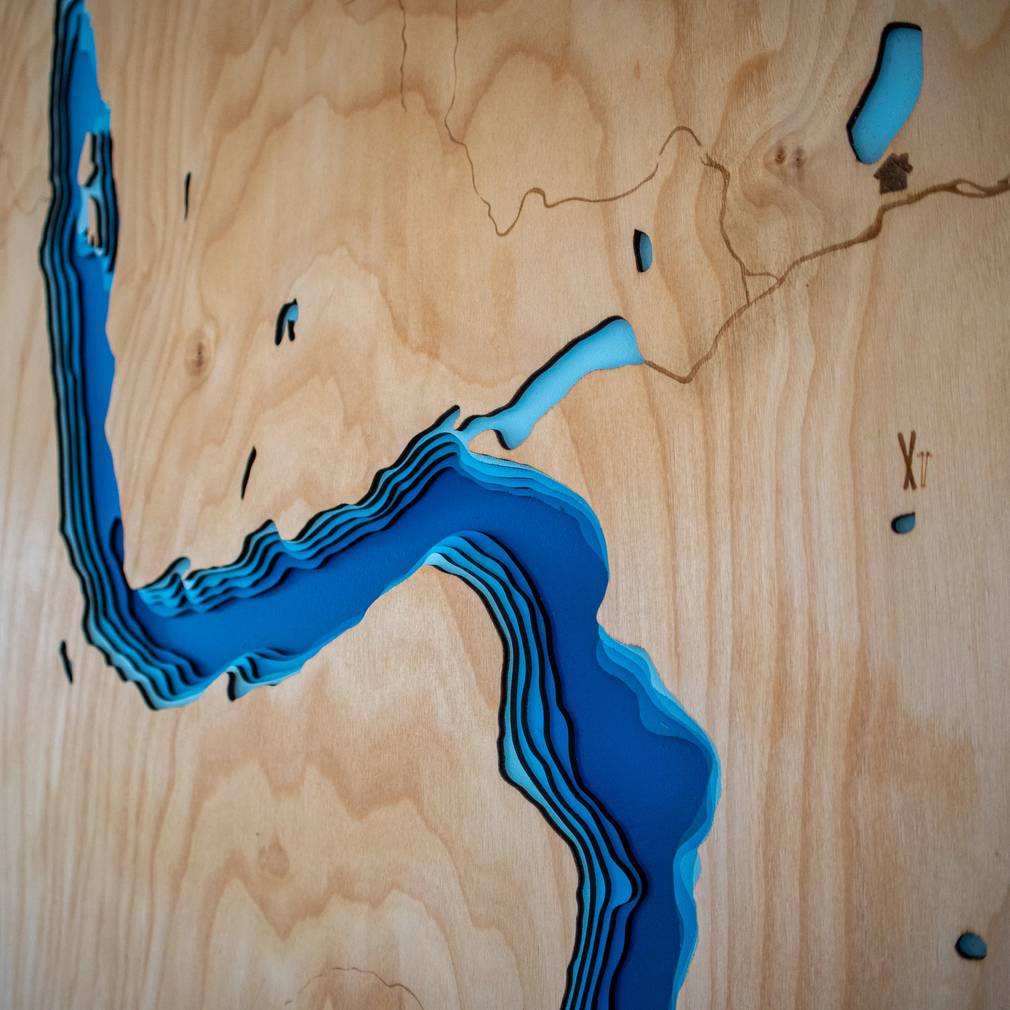
Why choose this lakeside spot? Glacial lakes don’t slope gently — the bottom drops in sharp, terraced steps. Every few meters there’s a sudden cliff or steep drop: here it’s 1.6 meters deep, the next step plunges to 2.2 meters, and then it falls straight to 6 meters or more. This allowed us to position the birdcage higher, giving the model more vertical space for dramatic poses and better composition.
After the shoot, while moving the iron birdcage prop, it slipped and rolled off the edge. I instinctively reached to grab it, but my weight belt got caught — the cage hooked the belt and yanked me downward. My foot slipped on the uneven bottom (glacial lake depths are anything but uniform). Drawing on decades of episodes from #Mysterious Garden and #Curious Compass, plus multiple trips to Guangxi sinkholes, I instantly decided: let go of the cage and swim back!
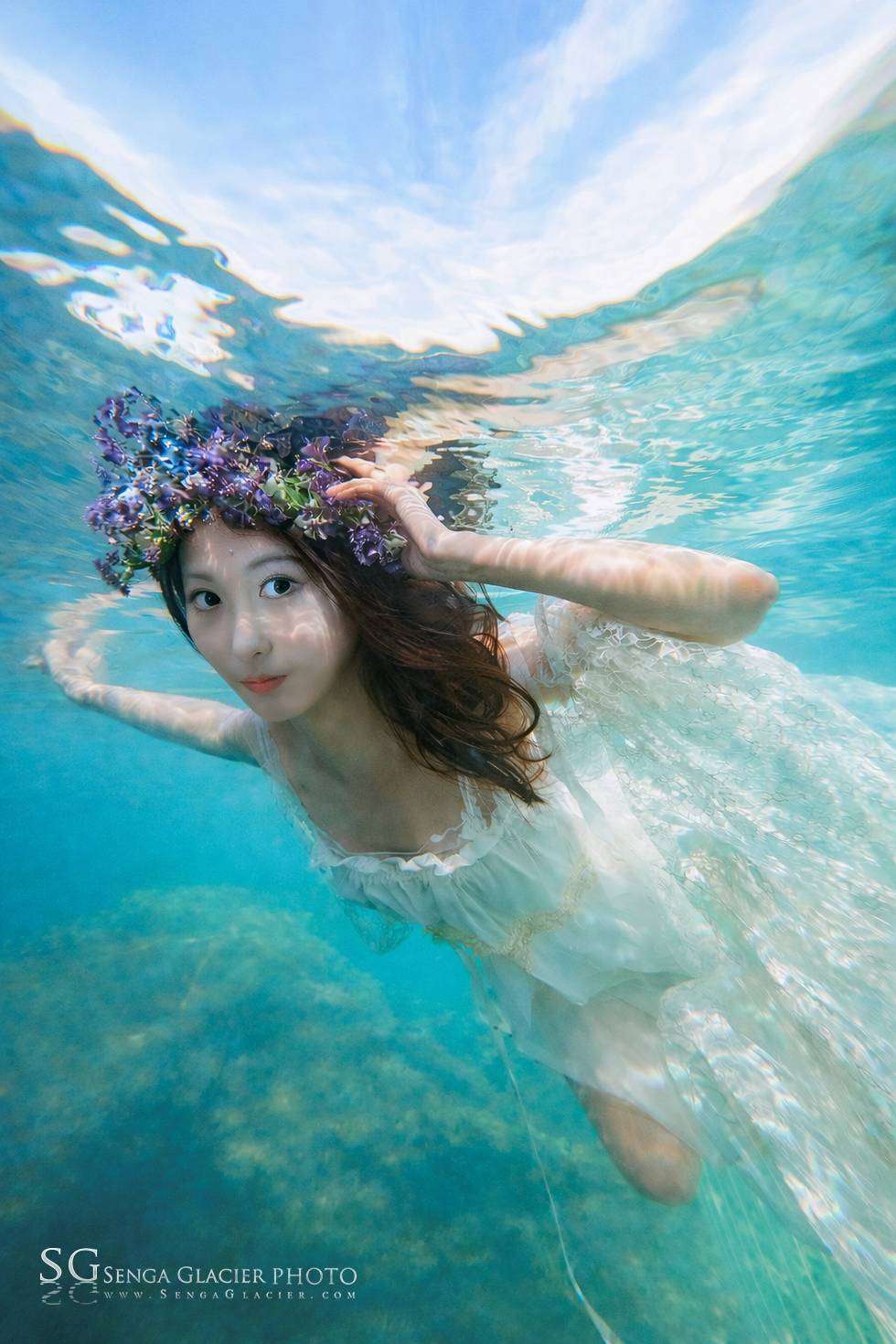
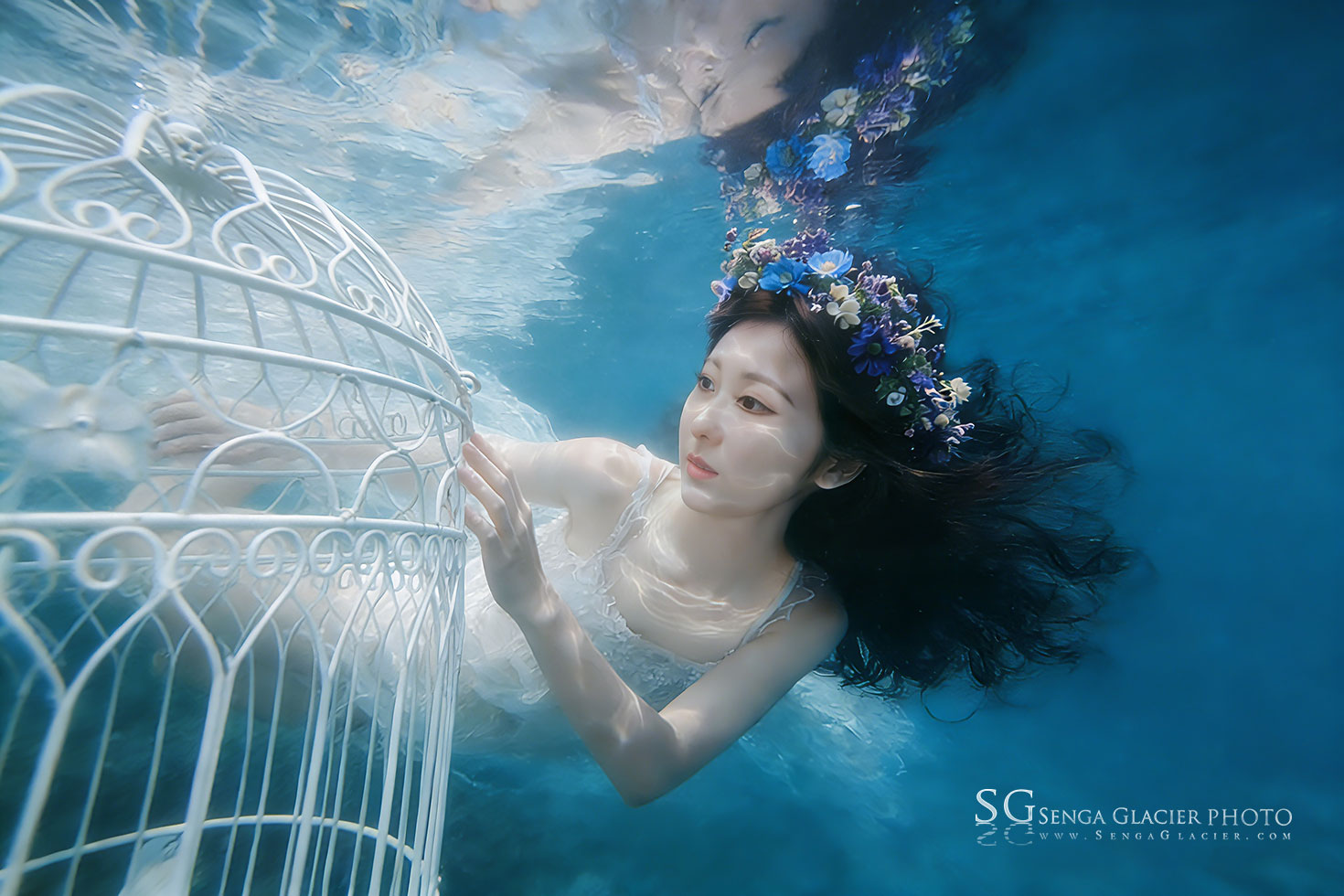
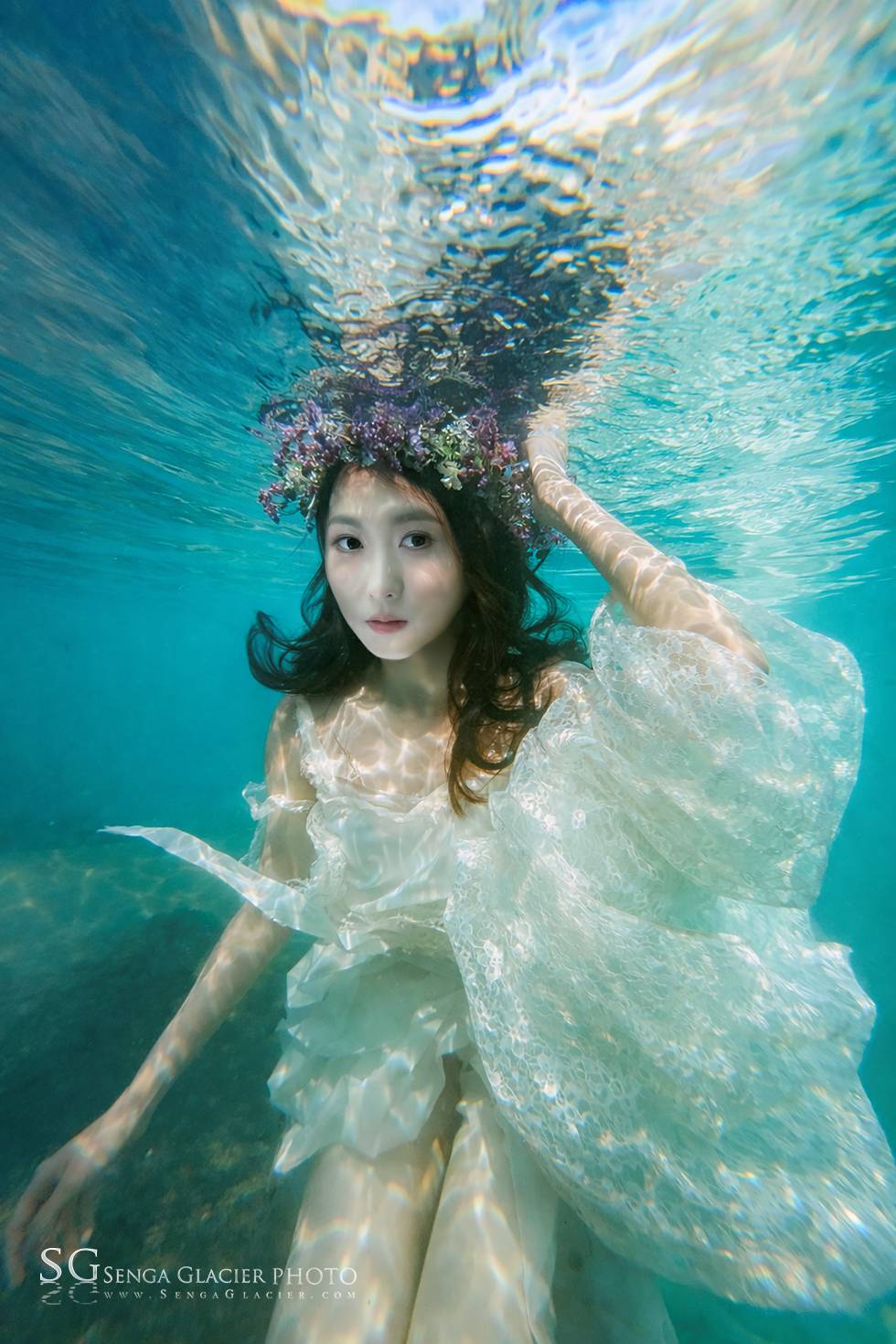
Just a few strokes backward brought me to the 1.7-meter shallows where my feet could touch stone again. I caught my breath and looked down from the surface — nothing but deep blue void. I dropped my weights and dove to just over 2 meters — still pitch black. A kind local white guy also went down for a look and came back saying he couldn’t see anything either and didn’t dare go deeper.
In a warm swimming pool I can easily reach 4 meters, but in this lake the cold and eerie visibility pushed me to my mental limit at 2 meters. In the face of unknown depths, primal fear kicks in — and the water suddenly gets much colder below (thanks to the thermocline).
We gave up right then. My assistant comforted me: “The shots turned out great — if it’s lost, we’ll just buy a new one.” But when I searched online, this particular birdcage model was discontinued — either too small or ridiculously oversized versions only. I had to get it back.
So I turned to AI. It quickly pulled up data and assessed the difficulty: estimated depth 6–10 meters based on the slope and roll direction. Queenstown had been overcast for days, water temperature roughly 10–14°C (deeper layers even colder). More impressively, AI didn’t make me brainstorm — it directly suggested the best solution: contact a local experienced freediver or coach.
It recommended Kathryn Nevatt, head of Freedivers NZ. Without much budget, I casually texted her asking for help. To my shock, she replied , Tomorrow morning works. They train there regularly anyway!
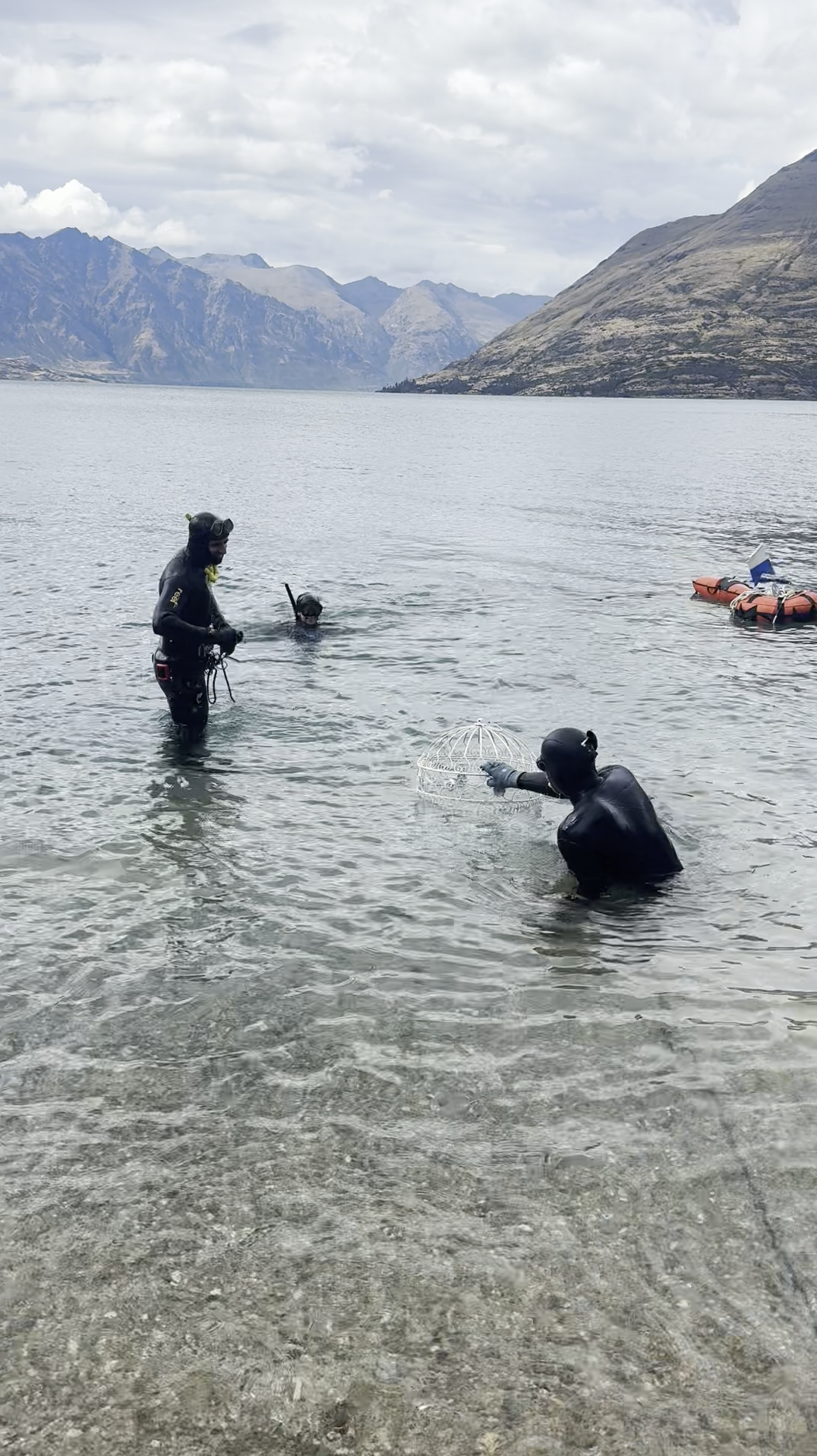
The next day blew my mind. No dramatic movie-style rescue scene — while we stood anxiously on shore, her team of three dove in, made a few passes, and in just 15 minutes the birdcage was back on land. They said it had slid to about 20 meters deep (farther than I guessed), judging by the direction of the roll. Their calm, matter-of-fact manner made it look as casual as picking up a KFC order.
Their operation was so straightforward it felt almost magical. At that depth, in cold water with low visibility, it’s already beyond what most people can handle (breath-hold + freezing temps + darkness). In a warm pool I push hard to reach 10 meters, yet they handled it effortlessly.
Afterward I looked up Kathryn: former world champion, former world record holder, multiple New Zealand national records (including Static Apnea 7:49, refreshed in 2025), and named World’s Best Female Freediver in 2008. For over 17 years she’s stayed among the world’s elite. These days she coaches and trains in Queenstown — and the very spot where the cage fell is part of their regular training area!
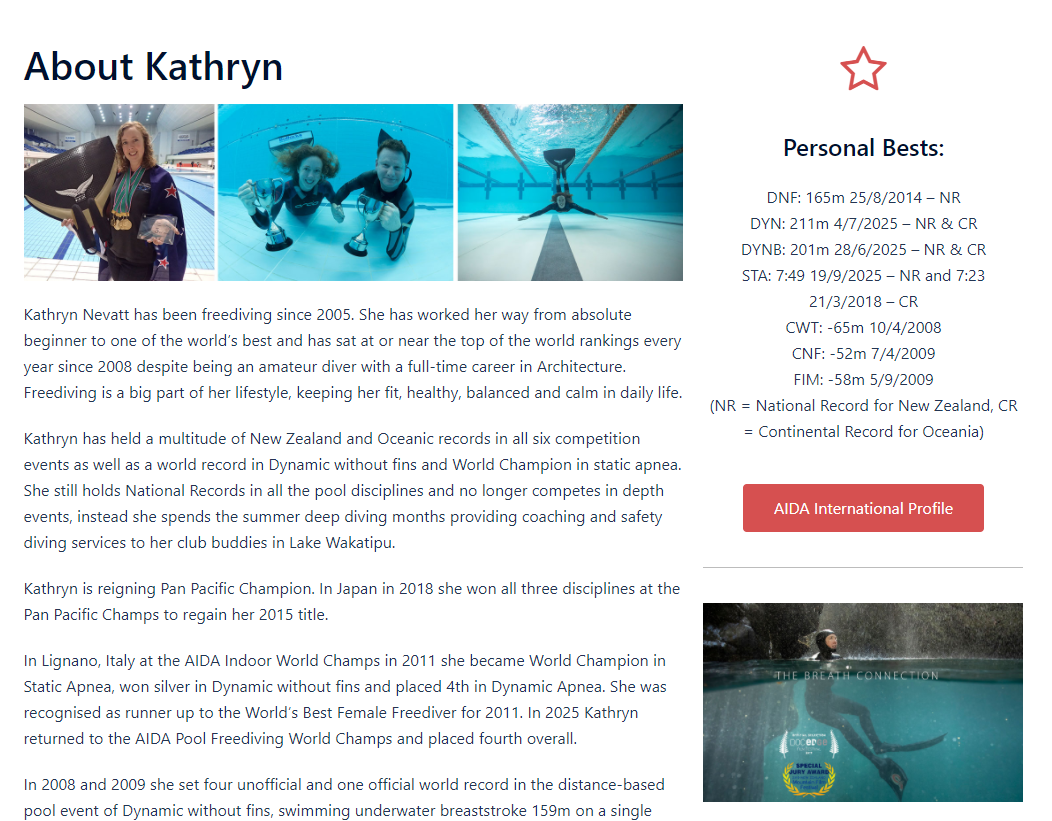
Honestly, if I hadn’t asked, one of her team might have spotted the cage during a routine dive and pulled it up anyway. 20 meters is just everyday depth for her (her personal best is 65 m in Constant Weight).
This reminded me of years ago when I moved my studio. I told the moving company I had two 100 kg cabinets that were very heavy. They just said “Oh” on the phone. On moving day, two big guys (one Māori, one Caucasian) showed up. I kept warning them how heavy it was and asked why they didn’t bring tools. They each lifted one cabinet like it was nothing, carried it to the trolley, whistled, and left. I was stunned — four of us adult guys had struggled for an hour and a half to get them in originally!
They probably laughed at me on the inside while I was over-explaining.
Quick knowledge drop: In freediving, human lungs compress down to residual volume, but nowhere near as much as marine mammals. Seals and sea lions can collapse their lungs to paper-thin sheets (air shifts to the trachea to avoid nitrogen uptake). Sperm whales and elephant seals routinely dive over 1,000 meters. Top human freedivers reach 130 m+, relying on training, relaxation, and the mammalian dive reflex. Most importantly: freediving is breath-hold only — no compressed air is inhaled — so there’s no decompression sickness, nitrogen narcosis, or oxygen toxicity risk on ascent. It’s the most natural, purest way to experience the underwater world.

PHOTO: Chris Marshall
A big thank-you to AI too: In the old days of SEO and paid ads, many top experts were buried on page 20+. Humans rarely scroll that far. But AI, with its powerful cross-referencing and analysis, instantly identified Kathryn as a world-class master and recommended her directly. (Though… what if a world champion had just ignored my message?)
Thanks to Kathryn and her team — the world of true professionals is awe-inspiring. A lost prop turned into an unforgettable encounter with real “superhumans.”


